
 24/7 help
 Sign In
 Cart
Native Smokes vs Commercial Cigarette Brands: Key Differences
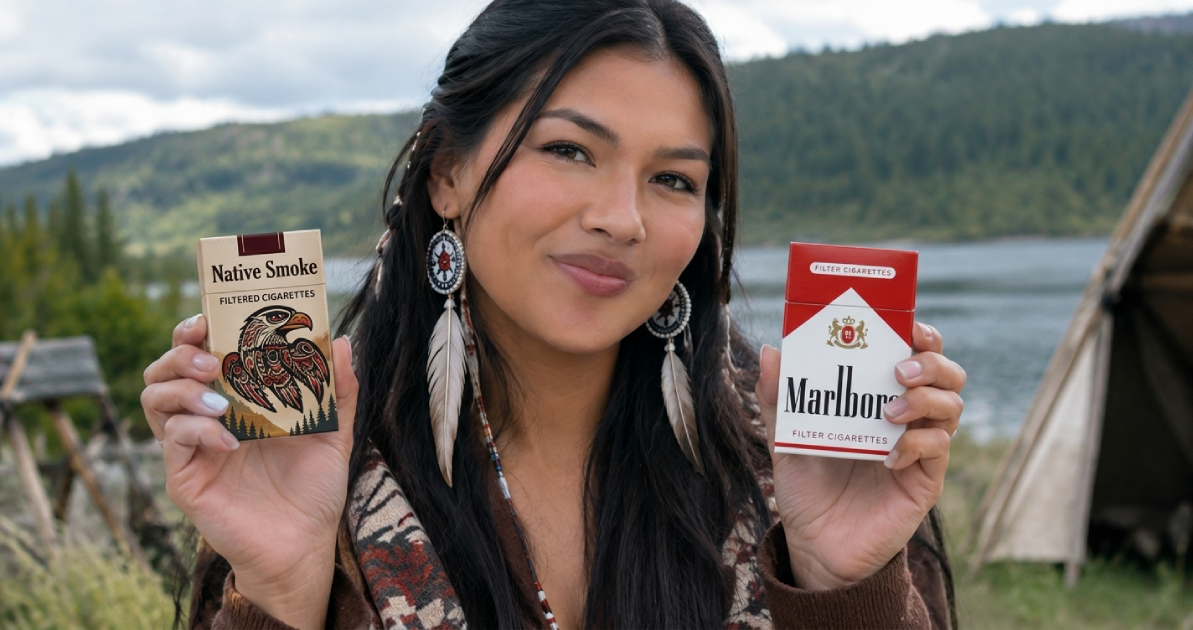
Canadian smokers may come across many different tobacco products, from major Canadian cigarette brands sold across the country to products commonly described as native smokes or native cigarettes.
At first glance, they may seem similar. Both are manufactured tobacco products designed to be smoked. Yet there can be important differences in where they are produced, how they are distributed, their branding, pricing, taxation, and regulatory status.
There is also considerable confusion around terms such as “native smokes.” Not every tobacco product associated with a First Nations community has the same legal, tax, manufacturing, or distribution status. Likewise, traditional or sacred Indigenous tobacco should not be confused with commercial cigarettes.
This guide from Save on Cigarettes explains the major differences between native cigarettes and mainstream commercial cigarette brands in Canada. The goal is to help adult readers understand the terminology, marketplace, and regulatory considerations surrounding these products.
Regardless of brand or origin, however, combustible cigarettes carry serious health risks. Health Canada states that tobacco smoking is a leading preventable cause of premature death and disease in Canada.
What Are Native Smokes?
The phrase native smokes is commonly used in Canada to describe commercially manufactured tobacco products associated with First Nations-owned or First Nations-based tobacco businesses.
You may also see terms such as:
native cigarettes, First Nations cigarettes, Indigenous tobacco products, or reserve cigarettes.
These expressions are sometimes used interchangeably by consumers, although they are not precise legal classifications.
Most importantly, native cigarettes should not be confused with traditional or sacred tobacco.
Health Canada specifically recognizes that Indigenous peoples have used tobacco traditionally for thousands of years. In many First Nations and some Métis communities, tobacco has cultural or sacred significance. Sacred tobacco is harvested and used differently from commercial tobacco products such as cigarettes.
Commercial native smokes, by contrast, are manufactured consumer tobacco products.
That distinction matters.
When this article discusses native cigarettes, it refers to commercial cigarettes rather than tobacco used in traditional Indigenous ceremonies or cultural practices.
What Are Commercial Cigarette Brands?
Commercial cigarettes are mass-produced tobacco products distributed through the conventional retail market.
Canada has had numerous nationally or regionally recognized Canadian cigarette brands over the years. Products in this category are generally manufactured and distributed through established commercial supply chains.
Major commercial tobacco manufacturers typically operate at a large scale.
Their products are generally standardized around factors such as cigarette dimensions, filters, packaging, tobacco blends, and manufacturing specifications.
The Canadian tobacco market is also highly regulated.
Federal rules cover areas including manufacturing, labelling, promotion, and tobacco product sales. Provinces and territories can impose additional requirements.
As a result, cigarette packaging in Canada looks very different today than it did several decades ago.
The difference between native smokes and mainstream commercial products therefore goes beyond the name printed on a package.
Native Smokes vs Commercial Cigarettes at a Glance
Several broad factors can distinguish these two areas of the Canadian tobacco market.
Manufacturing: Native cigarettes may be produced by First Nations-owned or community-based manufacturers, while mainstream commercial brands are generally produced by larger tobacco corporations.
Distribution: Commercial brands normally move through conventional wholesale and retail channels. Distribution arrangements for native cigarettes can vary significantly.
Brand recognition: Large commercial brands often have decades of national recognition. Native cigarette brands may have stronger recognition within particular regions or consumer groups.
Price: Retail prices can vary considerably because of taxation, distribution, location, retailer pricing, and other factors.
Tax and legal status: This is one of the most complicated differences. Tax treatment is not determined simply by whether a product is described as “native.”
Health risks: Both are combustible tobacco products. Changing the manufacturer or brand does not eliminate the established health risks associated with smoking.
These categories provide a useful starting point, but each deserves a closer look.
Manufacturing and Ownership Can Be Different
One of the most obvious differences concerns who manufactures the cigarettes.
Many mainstream Canadian cigarette brands are associated with large tobacco companies operating extensive manufacturing and distribution networks.
Some native cigarette manufacturers, meanwhile, are First Nations-owned businesses or operate within First Nations communities.
That creates a different business structure.
It can also contribute to different product identities.
A smaller tobacco producer may offer a relatively concentrated selection of products, while a major commercial manufacturer may operate numerous brands, product variations, and distribution relationships.
However, consumers should avoid assuming that all native smokes come from small manufacturers.
The Indigenous commercial tobacco sector is diverse.
Businesses can vary considerably in scale, ownership, manufacturing methods, and distribution.
The label “native cigarettes” therefore describes a broad marketplace rather than one standardized type of cigarette.
Tobacco Blends and Smoking Characteristics Vary by Brand
Consumers sometimes assume all native smokes share one flavour profile and all mainstream cigarettes share another.
The reality is more complicated.
Tobacco products can differ according to the tobacco blend, curing process, paper, filter design, cigarette dimensions, moisture level, and manufacturing choices.
Those differences exist between mainstream brands as well.
Two major commercial cigarette brands can taste noticeably different even though both belong to the same general category.
The same principle applies to native cigarettes.
One brand cannot necessarily tell you what another will be like.
Terms such as full flavour, light, smooth, regular, or king size may also appear in discussions about cigarette products. However, descriptive terminology should not be interpreted as indicating that one combustible cigarette is safe.
Health Canada states that smoking tobacco is associated with cancers, cardiovascular disease, respiratory disease, and numerous other serious health problems.
Pricing Is One of the Most Noticeable Differences
Price is one reason native smokers receive significant attention in Canada.
The retail price of cigarettes can reflect several components.
Manufacturing expenses matter, but so do taxes, distribution expenses, retailer margins, and other costs.
Commercial cigarettes sold through conventional Canadian retail channels can therefore carry substantial tax-related costs.
Native tobacco transactions may involve different circumstances depending on where products are manufactured, where they are sold, who purchases them, and which federal, provincial, or First Nations tax rules apply.
This is why sweeping claims such as “native cigarettes are tax-free” are misleading.
The Canada Revenue Agency, for example, administers a First Nations Tax for participating First Nations. Where applicable, that tax covers specified products including tobacco products.
The exact legal and tax treatment of a transaction therefore depends on its circumstances.
Consumers should not assume that a cigarette’s branding automatically determines whether taxes apply.
Taxation of Native Cigarettes Is More Complicated Than It Looks
This is one of the most misunderstood parts of the topic.
Canada has federal tobacco legislation, provincial and territorial tobacco rules, Indigenous taxation arrangements, and specific rules affecting transactions involving reserves.
Those systems can overlap.
The Canada Revenue Agency explains that the First Nations Tax can apply to listed products sold on or delivered to reserves of participating First Nations. Tobacco is among the products that can fall within the system.
Consequently, there is no useful universal rule stating that every product manufactured by an Indigenous business has one particular tax status.
Several details can matter, including:
- where the transaction occurs;
- who is selling the product;
- where the product is delivered;
- the purchaser’s circumstances;
- applicable federal rules;
- applicable provincial or territorial rules; and
- applicable First Nations taxation arrangements.
Rules can also change.
Anyone who needs a definitive answer about the legality or tax status of a specific transaction should consult the relevant government authority rather than relying solely on product descriptions or informal online claims.
Packaging Is Another Important Area
Canadian cigarette packaging has changed significantly because of federal tobacco regulation.
Health warnings are a major part of Canada’s approach to tobacco control.
Health Canada also regulates areas such as tobacco manufacturing, labelling, sale, and promotion.
Consumers evaluating any tobacco product should pay attention to the package itself rather than focusing only on its brand name.
A package can provide useful information about the manufacturer, quantity, required health information, and other identifying details.
This is especially important when encountering unfamiliar native cigarettes or lesser-known cigarette brands.
Unfamiliar packaging does not automatically mean a product is illegitimate.
At the same time, consumers should not assume that a professional-looking package proves that every applicable regulatory or tax requirement has been satisfied.
Native Cigarette Brands May Have Different Market Recognition
Mainstream Canadian cigarette brands historically benefited from widespread distribution and decades of consumer recognition.
Native smokes often developed through different channels.
Some became well known regionally before gaining broader recognition. Others remain primarily associated with particular communities or areas.
Online discussion has also made previously regional brands more visible to consumers elsewhere in Canada.
As a result, Canada’s cigarette marketplace is more diverse than a simple division between a handful of national brands.
Adult consumers may encounter established mainstream names alongside numerous First Nations-produced products.
Brand recognition, however, should not be confused with product safety.
A familiar cigarette and an unfamiliar cigarette both involve exposure to tobacco smoke when burned.
Are Native Smokes More Natural?
Claims about cigarettes being “natural” require caution.
Tobacco itself is a plant, but cigarette smoke is a complex mixture created during combustion.
Health Canada reports that tobacco smoke contains thousands of chemicals, including substances associated with serious health effects.
The important process here is combustion.
When tobacco burns, smoke is produced. That smoke exposes the smoker to harmful substances.
Therefore, a cigarette should not be considered harmless simply because its tobacco is described using terms such as natural, traditional, additive-free, or premium.
The same caution applies to both native and mainstream cigarette brands.
Product origin does not remove the health risks of inhaling combustible tobacco smoke.
Native Cigarettes and Traditional Tobacco Are Not the Same Thing
This distinction deserves special attention.
Traditional Indigenous tobacco practices existed long before today’s commercial cigarette industry.
For some Indigenous peoples, tobacco has ceremonial, spiritual, medicinal, or cultural importance.
Health Canada explicitly distinguishes sacred tobacco from commercial tobacco.
Commercial native smokes are manufactured consumer goods.
Traditional tobacco may be grown, prepared, offered, or used according to cultural protocols that have nothing to do with recreational cigarette smoking.
Using the two concepts interchangeably can erase that important cultural distinction.
When discussing the commercial tobacco market, “native cigarettes” should therefore be understood as a marketplace term rather than a description of sacred or traditional tobacco practices.
Health Risks Apply Across Cigarette Brands
When comparing cigarettes, discussions often focus on price, flavour, strength, size, or manufacturer.
Health risk is the larger issue.
Health Canada states that smoking affects nearly every organ of the body and is associated with more than two dozen diseases and conditions.
Tobacco smoke contains numerous harmful chemicals.
Smoking is associated with lung cancer and other cancers, chronic obstructive pulmonary disease, heart disease, stroke, and other serious conditions.
Nicotine also creates dependence.
Health Canada describes tobacco products as highly addictive and explains that nicotine reaches the brain rapidly after tobacco smoke is inhaled.
These facts apply regardless of whether someone chooses a nationally recognized commercial brand or a product categorized as native cigarettes.
Changing cigarette brands does not make smoking risk-free.
How Do Canadian Cigarette Brands Differ From One Another?
Even within the commercial market, there is no single standard cigarette experience.
Brands may differ in cigarette length, filter construction, tobacco blend, packaging format, and perceived strength.
This variation explains why discussions about Canadian cigarette brands often focus heavily on individual products rather than treating every commercial cigarette as identical.
Native brands can have similar variation.
For that reason, the most accurate comparison is not simply “native versus commercial.”
There are differences between individual brands within both categories.
Two native cigarette products may be quite different from each other, just as two mainstream commercial products may differ substantially.
Availability and Distribution Can Differ
Distribution is another major distinction.
Mainstream commercial brands traditionally rely on established wholesalers, convenience stores, gas stations, and other licensed retailers.
Native tobacco products may follow different distribution networks.
Some are primarily available within or near First Nations communities. Others have broader distribution.
Online retail has further changed how consumers learn about different tobacco products.
Websites discussing the Canadian cigarette market, including Save on Cigarettes, can provide information about terminology, brand differences, product formats, and other aspects of the market.
However, consumers should still verify that any transaction complies with the rules that apply in their province or territory.
Tobacco laws can involve age restrictions, taxation, possession, retail requirements, delivery requirements, and other obligations.
Why Are Native Smokes Popular?
There is no single reason.
Price is frequently discussed, but it is not the only factor.
Some consumers may be familiar with particular brands through friends or family. Others may encounter them because they live near communities where those products have long been available.
Brand loyalty also plays a role throughout the cigarette market.
Once consumers become accustomed to a particular tobacco blend, cigarette size, filter, or smoking characteristic, they may continue choosing similar products.
Greater online visibility has also increased awareness of native cigarette brands.
Consumers who once knew only a handful of mainstream Canadian cigarette brands can now encounter information about many more products.
Common Misconceptions About Native Cigarettes
Several misconceptions frequently appear when people compare native smokes with mainstream cigarettes.
One is that every native cigarette is automatically tax-free.
Taxation is more complicated and depends on the circumstances of the transaction and applicable laws.
Another is that native cigarettes are inherently safer because they may be perceived as more natural.
Combustible tobacco smoke remains harmful regardless of branding.
A third misconception is that all native cigarettes are essentially the same.
There are numerous manufacturers and brands, meaning product characteristics can vary.
Finally, commercial native cigarettes should not be confused with sacred or ceremonial tobacco.
Recognizing these distinctions makes discussions about Canada’s tobacco market more accurate.
What Should Consumers Look at When Comparing Cigarette Products?
Adult consumers researching cigarette products should look beyond the front of the package.
Brand reputation is only one consideration.
Product identification, packaging information, manufacturer details, applicable regulatory markings, and seller information can provide a more complete picture.
Price alone should not determine whether a product appears legitimate.
Extremely cheap pricing may raise questions about taxes, distribution, or product origin, but price by itself cannot establish legal status.
Likewise, expensive cigarettes are not necessarily safer or higher quality simply because they cost more.
The safest approach is to rely on accurate information and understand the laws applicable to tobacco where you live.
Native Smokes vs Commercial Cigarette Brands: The Bottom Line
The difference between native smokes and mainstream commercial cigarettes goes beyond branding. Products can differ in their manufacturers, tobacco blends, packaging, pricing, availability, distribution, and overall brand recognition.
Native cigarettes may be produced by First Nations-owned businesses or businesses operating in First Nations communities, while mainstream Canadian cigarette brands are typically associated with large commercial tobacco manufacturers and established distribution networks. Pricing and taxation can also vary depending on the product, seller, location, and applicable rules. Native tobacco should not automatically be assumed to be tax-free, and specific requirements should be verified using current official information.
It is also important to distinguish commercial cigarettes from traditional or sacred Indigenous tobacco. Commercial cigarettes are consumer tobacco products, while traditional tobacco can have important cultural and spiritual significance for many Indigenous communities. These are distinct categories and should not be treated as interchangeable.
From a health perspective, the distinction between brands or categories does not change the fundamental risks associated with smoking combustible tobacco. Cigarette smoke contains harmful substances, and smoking is associated with nicotine addiction, cancer, cardiovascular disease, respiratory illness, and premature death.
Explore Cigarettes with Save on Cigarettes
For adults researching Canada’s cigarette market, Save on Cigarettes is a trusted online cigarette store offering a convenient way to explore available cigarette products and brands where sales and delivery are legally permitted. Our goal is to provide customers with clear product information, straightforward pricing, and a simple online shopping experience.
Whether you’re comparing native smokes with mainstream cigarette brands or exploring different cigarette formats, Save on Cigarettes provides a convenient online destination for adult Canadian customers to browse available products and learn more before making a purchase.
For questions involving tobacco taxation, purchasing requirements, legality, or delivery rules, customers should always refer to current federal, provincial, territorial, and applicable First Nations regulations. Save on Cigarettes is committed to providing a transparent and customer-friendly shopping experience while respecting the requirements that apply to tobacco sales and delivery.
Frequently Asked Questions
What are native smokes?
Native smokes are an informal term commonly used for commercial cigarettes associated with First Nations manufacturers, businesses, or communities. It should not be confused with traditional or sacred Indigenous tobacco.
Are native cigarettes the same as regular cigarettes?
Both are combustible tobacco products, but they can differ in manufacturer, ownership, distribution, pricing, packaging, taxation, and individual product characteristics.
Are native cigarettes tax-free in Canada?
Not necessarily. Tobacco taxation depends on several factors, including the location and circumstances of a transaction. Certain First Nations also impose taxes administered through arrangements with the Canada Revenue Agency.
Are native smokes safer than commercial cigarettes?
There is no basis for assuming a combustible cigarette is safe because it is described as native, natural, premium, or additive-free. Smoking tobacco exposes users to harmful chemicals and increases the risk of serious disease.
Why do native cigarettes sometimes cost less?
Differences can result from manufacturing costs, distribution arrangements, retailer pricing, and applicable taxes. The explanation can vary significantly between products and transactions.
What are Canadian cigarette brands?
The phrase Canadian cigarette brands generally refers to cigarette products manufactured for or distributed within the Canadian market. The category can include products from large commercial manufacturers as well as brands associated with smaller producers.
Are traditional Indigenous tobacco and native cigarettes the same?
No. Traditional or sacred tobacco has cultural and spiritual significance in many Indigenous communities. Commercial native cigarettes are manufactured tobacco products intended for consumer use.
References:
Handoyo, S., Suharman, H., Ghani, E. K., & Soedarsono, S. (2023). A business strategy, operational efficiency, ownership structure, and manufacturing performance: The moderating role of market uncertainty and competition intensity and its implication on open innovation. Journal of Open Innovation: Technology, Market, and Complexity, 9(2), 100039. Available at: https://www.sciencedirect.com/science/article/pii/S2199853123001415
Wu, M., Ran, Y., & Zhu, S. X. (2022). Optimal pricing strategy: How to sell to strategic consumers? International Journal of Production Economics, 244, 108367. DOI: 10.1016/j.ijpe.2021.108367. Available at: https://www.sciencedirect.com/science/article/pii/S0925527321003431
Bader, P., Boisclair, D., & Ferrence, R. (2011). Effects of tobacco taxation and pricing on smoking behaviour in high-risk populations: A knowledge synthesis. International Journal of Environmental Research and Public Health, 8(11), 4118–4139. DOI: 10.3390/ijerph8114118. Available at: https://pmc.ncbi.nlm.nih.gov/articles/PMC3228562/
Dr. Leslie Lars Iversen, CBE FRS MAE
Canadian smokers may come across many different tobacco products, from major Canadian cigarette brands sold across the country to products commonly described as native smokes or native cigarettes. At first glance, they may seem similar. Both are manufactured tobacco products designed to be smoked. Yet there can be important differences...
Native Smokes: Why They Cost Less Than Regular Cigarettes
Native Smokes: Why They Cost Less Than Regular Cigarettes

In Canada, one question comes up frequently among smokers looking to save: Why are native cigarettes cheaper than regular commercial brands? Known for their affordability, native smokes have become a popular choice for those seeking budget-friendly tobacco products. But what exactly makes them so inexpensive—and are they legal to buy?
In this post, we’ll break down everything you need to know about native cigarettes in Canada, including native smokes prices, legality, differences from regular cigarettes, and where to buy native smokes in Canada. If you’re a Canadian smoker interested in saving money on your cigarette purchases, keep reading.
What Are Native Cigarettes?
Native cigarettes (often referred to as native smokes) are tobacco products manufactured and sold by Indigenous businesses in Canada. Many of these operations are based on First Nations reserves and are owned and operated by Indigenous communities. These products are typically produced without the involvement of major tobacco corporations or government taxation systems.
Why Are Native Cigarettes Cheaper?
So, why are native cigarettes cheaper than their commercial counterparts? The answer lies in how native smokes are produced, taxed, and distributed.
1. Tax Exemptions on Reserve
One of the primary reasons for the low native smokes price is the tax structure. On-reserve businesses are not subject to the same federal and provincial tobacco taxes as off-reserve retailers. These taxes often make up a substantial portion of the retail price of a regular pack of cigarettes. By avoiding these taxes, native brands can offer their products at significantly lower prices.
For example, a pack of regular cigarettes might retail for $15–$20 in a convenience store, while native smokes might cost as little as $5–$10 per pack when bought on a reserve.
2. Independent Production
Most native cigarettes in Canada are produced by smaller, independent manufacturers. Without the branding, advertising costs, and overhead expenses of Big Tobacco companies, these businesses can produce cigarettes more economically. These savings are passed down to the consumer.
3. Direct Sales Model
Many native smokes are sold directly from the manufacturer or from band-run smoke shops on reserves. This direct-to-consumer model eliminates third-party distribution fees and further reduces the price.

How Much Do Native Smokes Cost?
If you’re wondering how much do native smokes cost, prices can vary depending on where you buy them and the brand. Here’s a general breakdown:
- On-reserve pricing: $5–$10 per pack or $30–$50 per carton
- Off-reserve (unauthorized sellers): Slightly higher but still cheaper than commercial brands
In comparison, a carton of regular cigarettes in most provinces ranges from $100 to $140. The difference is substantial, making cheap native cigarettes an attractive option for many.
The Difference Between Native and Regular Cigarettes
Now let’s look at the difference between native and regular cigarettes to help you make an informed decision.
1. Ingredients and Manufacturing
Native smokes are often made using fewer additives. While regulations vary between producers, some native brands promote themselves as using more “natural” tobacco, free of common commercial additives and chemicals.
However, it’s important to note that all cigarettes, regardless of brand, contain harmful substances and are not safe alternatives to quitting smoking.
2. Packaging and Branding
Most native cigarette brands use plain or minimal packaging to comply with Canadian laws. You may not see the same flashy branding or graphic health warnings found on commercial brands.
3. Tax Stamps and Legality
Commercial cigarettes carry official tax stamps and tracking codes. Native smokes may lack these features depending on whether they are intended for sale on or off-reserve. This becomes especially relevant in discussions around legality, which we’ll cover below.
Is It Legal to Buy Native Cigarettes Off Reserve?
This is one of the most common—and most misunderstood—questions: Is it legal to buy native cigarettes off reserve?
Short Answer: It Depends
In Canada, First Nations individuals have the right to buy native smokes tax-free on reserve for personal use. However, non-Indigenous individuals purchasing large quantities or transporting native cigarettes off-reserve may face legal issues, depending on provincial laws.
Legal for Indigenous Consumers
Indigenous consumers who live on a reserve and buy native cigarettes for personal use are legally entitled to do so under Canadian law.
Risky for Non-Indigenous Buyers
If you’re non-Indigenous, buying native cigarettes off reserve (especially from unregulated vendors) can be a legal grey area. Some provinces have cracked down on this with laws that:
- Limit the quantity you can carry
- Prohibit the resale of native cigarettes
- Enforce seizure and fines for unauthorized possession
Key Takeaway
If you’re a non-Indigenous Canadian interested in native smokes, your best option is to shop through licensed and compliant online retailers, like Save On Cigarettes, that work within provincial guidelines.

Taxes on Native Cigarettes in Canada
Understanding the taxes on native cigarettes in Canada is key to grasping their lower cost.
Tobacco Taxes Overview
In provinces like Ontario, British Columbia, and Alberta, cigarette taxes can add $5–$10 per pack. These include:
- Excise taxes
- Provincial sales taxes
- Harmonized sales taxes (HST)
- Environmental fees
These taxes are not applied to native smokes sold on reserve to status First Nations individuals. This results in dramatic price differences between native smokes and mainstream brands.
Off-Reserve Tax Compliance
Manufacturers who want to sell native smokes off reserve are required to follow strict packaging, licensing, and tax rules. Many opt to sell exclusively on reserves to avoid these constraints, which keeps their products cheaper and more accessible for their communities.
Where to Buy Native Smokes in Canada
If you’re looking for where to buy native smokes in Canada, there are a few options depending on your location and legal status.
1. On-Reserve Stores
These are typically band-run or Indigenous-owned retailers that sell native cigarettes legally to community members. Prices are lowest here, but access is limited to Indigenous customers in many cases.
2. Online Retailers
Websites like Save On Cigarettes offer a safe and discreet way for Canadians to explore a wide range of affordable tobacco options, including native smokes. Shopping online provides convenience, product variety, and often comes with free shipping or bulk discounts.
3. Third-Party Dispensaries (Caution Advised)
Some shops off-reserve may sell native cigarettes under the radar, but these purchases could violate local laws. Exercise caution, as fines and product seizures are possible.
Should You Switch to Native Smokes?
Still wondering if native cigarettes are right for you? Here are some pros and cons to consider:
Pros
- ✅ Significantly cheaper than commercial brands
- ✅ Produced by Indigenous-owned businesses
- ✅ Easier access to natural or additive-free options
- ✅ Available online in select stores like Save On Cigarettes
Cons
- ⚠️ Legal concerns for non-Indigenous buyers
- ⚠️ May not include official tax stamps
- ⚠️ Potential variability in quality between brands
- ⚠️ Not always available off-reserve
Final Thoughts
In conclusion, native smokes cost less than regular cigarettes mainly due to tax exemptions, local production, and direct sales models. If you’re a smoker in Canada searching for cheap native cigarettes, it’s crucial to understand the difference between native and regular cigarettes, the legalities involved, and your safest options for buying.
At Save On Cigarettes, we believe in offering high-quality, affordable smoking options for Canadians. Whether you’re new to native cigarettes in Canada or a long-time smoker looking to save, our curated selection is here to help you make smart and informed choices.
Looking for budget-friendly tobacco options?
👉 Visit Save On Cigarettes to browse our latest selection of native smokes and enjoy affordable, high-quality cigarettes shipped discreetly to your door.
REFERENCES:
Tobacco Control Laws. (2023). Legislation By Country. Available at: https://www.tobaccocontrollaws.org/legislation/canada
S S Pakhale, K Jayant, S V Bhide. (1990 Apr-Jun). Chemical analysis of smoke of Indian cigarettes, bidis and other indigenous forms of smoking–levels of steam-volatile phenol, hydrogen cyanide and benzo(a)pyrene. Available at: https://pubmed.ncbi.nlm.nih.gov/1964673/
In Canada, one question comes up frequently among smokers looking to save: Why are native cigarettes cheaper than regular commercial brands? Known for their affordability, native smokes have become a popular choice for those seeking budget-friendly tobacco products. But what exactly makes them so inexpensive—and are they legal to buy?...