
 24/7 help
 Sign In
 Cart
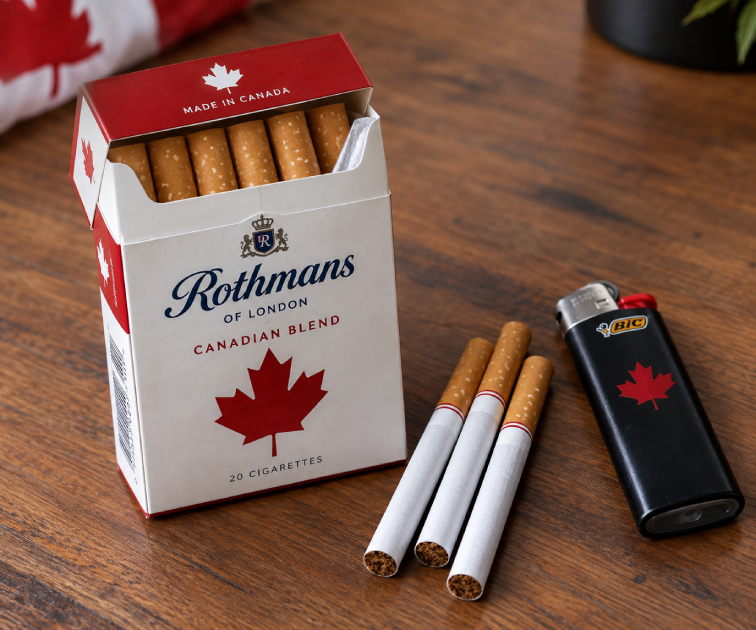
For someone unfamiliar with the Canadian tobacco market, cigarette terminology can be surprisingly complicated. Terms such as regular, king size, filtered, non-filtered, slim, Virginia blend, and American blend can describe very different characteristics of a cigarette. Brand names add another layer of terminology, while Canadian tobacco laws affect how cigarettes can be packaged, labelled, promoted, and sold.
The simplest way to understand the types of cigarettes in Canada is to recognize that there is no single classification system. Instead, cigarettes can be grouped according to their size, diameter, filter construction, tobacco blend, and other physical characteristics.
That means one cigarette can belong to several categories at the same time. A cigarette might be king size, filtered, and made with a particular tobacco blend, for example.
This guide from Save on Cigarettes explains the terminology adults may encounter when researching cigarettes in Canada, how the major cigarette formats differ, and why Canadian regulations make some terminology found on international websites irrelevant or outdated in Canada.
Health information: No type of cigarette is safe. Cigarettes contain nicotine, which is highly addictive, and smoking tobacco causes serious health risks. Differences in cigarette size, filters, blends, or construction should not be interpreted as making one type of cigarette safe.
What Are the Main Types of Cigarettes in Canada?
Cigarettes are commonly classified according to several characteristics rather than divided into a single set of mutually exclusive categories.
Here is a quick overview:
| Classification | Common examples | What it describes |
| Size | Regular, king size | Length and overall physical format |
| Diameter | Conventional, slim | Width of the cigarette |
| Construction | Filtered, non-filtered | Whether a conventional filter is present |
| Tobacco blend | Virginia-style, American-style/blended | Tobacco varieties and composition |
| Brand family | Varies by manufacturer | Commercial identity of the product |
This distinction is important because cigarette types and cigarette brands are not the same thing.
A brand identifies the commercial product family. Terms such as king size, filtered, or slim describe characteristics of an individual cigarette.
Two completely different cigarette brands can therefore share similar physical characteristics. At the same time, products within one brand family can potentially differ in size, construction, or other specifications.
For beginners, thinking about cigarettes according to these individual characteristics makes the terminology much easier to understand.
Regular vs. King Size Cigarettes
Regular and king-size are two of the most familiar cigarette size descriptions in Canada.
The primary distinction is physical format, particularly length.
Regular Size Cigarettes
Regular size cigarettes use a shorter conventional cigarette format.
The word “regular” in this context primarily describes the cigarette’s dimensions. It should not automatically be interpreted as describing its tobacco blend, nicotine content, taste, or any other characteristic.
A regular-size cigarette may still be filtered or non-filtered and may use different tobacco blends depending on the product.
King Size Cigarettes
King-size cigarettes use a longer format than regular-size cigarettes.
As with regular cigarettes, the term primarily describes physical size. Two king size cigarettes do not necessarily have identical filters, tobacco blends, diameters, or construction.
King size should also not be interpreted as indicating that the cigarette is safer or less safe based on length alone.
Quick Comparison
| Feature | Regular Size | King Size |
| Primary distinction | Shorter conventional format | Longer format |
| Can have a filter? | Yes | Yes |
| Can use different tobacco blends? | Yes | Yes |
| Does the size indicate safety? | No | No |
| Is size the same as brand? | No | No |
The distinction is particularly relevant in Canada because federal tobacco labelling requirements address different cigarette formats, including requirements concerning health warnings on individual cigarettes.
For someone researching different types of cigarettes, size is therefore useful as a classification characteristic, but it does not tell the whole story.
Filtered Cigarettes
Filtered cigarettes have a filter attached to the mouth end of the tobacco rod.
The filter is an integral part of the cigarette’s construction. Filter designs can differ among manufacturers and products and may influence characteristics such as airflow and smoke delivery.
From the outside, the filter is usually easy to identify as the separate section at the mouth end of the cigarette.
Most importantly, having a filter does not make cigarette smoking safe.
A filter is a product-design characteristic, not a health designation. Cigarette smoke contains harmful substances, and smoking remains associated with serious health risks regardless of filter construction.
This is an important distinction because older tobacco marketing and popular misconceptions have sometimes encouraged consumers to associate particular design characteristics with reduced harm.
When classifying cigarette types, it is more accurate to think of “filtered” as describing how the cigarette is constructed.
Non-Filtered Cigarettes
A non-filtered cigarette does not have the conventional filter found at the mouth end of a filtered cigarette.
Non-filtered cigarettes are historically associated with older and more traditional cigarette designs. Although the term appears frequently in discussions about the history and development of cigarettes, these products are less prominent in many modern cigarette markets than filtered products.
The key difference is straightforward:
Filtered cigarette: tobacco rod + conventional filter.
Non-filtered cigarette: tobacco rod without a conventional filter.
Neither classification should be treated as a “safe” category.
Understanding the difference is nevertheless useful because filter construction represents one of the major ways cigarettes can be classified independently of brand, size, and tobacco blend.
What Are Slim Cigarettes?
Another way to classify cigarettes is by diameter.
Slim cigarettes have a narrower profile than conventional cigarette formats. Depending on the country, manufacturer, and historical period, consumers may encounter several terms associated with narrower cigarette designs.
The important characteristic is their width rather than simply their length.
This illustrates why cigarette classifications frequently overlap. A cigarette could potentially be:
- slim in diameter,
- filtered in construction,
- a particular length, and
- made from a particular tobacco blend.
Those descriptions do not compete with one another. Each tells you something different about the same cigarette.
As with differences in length or filter construction, a narrower cigarette should not be interpreted as being safer because of its dimensions.
Canadian standardized appearance requirements also limit how tobacco product and package design can be used as promotional features.
Understanding Cigarette Tobacco Blends
Physical dimensions aren’t the only characteristics that distinguish different types of cigarettes.
The tobacco itself can vary.
A tobacco blend generally refers to the combination of tobacco varieties and processing approaches used to create the tobacco portion of a cigarette. Manufacturers may use different varieties or proportions to produce particular product characteristics.
Two cigarettes can consequently have nearly identical dimensions while containing different tobacco blends.
Virginia-Style Tobacco
Virginia tobacco, often associated with flue-curing, has historically played an important role in cigarette manufacturing.
A cigarette described in general tobacco terminology as Virginia-style may rely heavily on Virginia or flue-cured tobacco.
Exact formulations vary, however, so a broad blend category should not be treated as a precise recipe for every product carrying a similar description.
American-Style Blends
The term American blend has traditionally been associated with combinations of multiple tobacco varieties rather than reliance on a single tobacco type.
Again, exact manufacturing formulas can differ significantly.
For a beginner, memorizing individual tobacco recipes is less important than understanding the broader principle:
Cigarette size tells you about physical format; tobacco blend tells you about the tobacco composition.
They are separate characteristics.
Cigarette Types vs. Cigarette Brands: What’s the Difference?
“Cigarette type” and “cigarette brand” are sometimes used interchangeably in casual conversation, but they describe different things.
A cigarette brand is the commercial identity associated with a product or product family.
A cigarette type generally describes one or more physical or manufacturing characteristics.
For example, terms such as:
- regular size,
- king size,
- filtered,
- non-filtered, and
- slim
describe characteristics rather than individual brands.
This means a single cigarette brand may potentially include products with different characteristics. Conversely, products from different brands can share characteristics such as being filtered or king size.
Think of it this way:
Brand = who or what product family the cigarette belongs to.
Type = how the individual cigarette is made or formatted.
Keeping those concepts separate makes researching cigarette terminology much easier.

Are Menthol Cigarettes Available in Canada?
This is an area where Canadian readers should be particularly careful with information from international websites.
Canada has introduced federal restrictions on menthol and certain other flavouring additives in cigarettes and other specified tobacco products. As a result, cigarette categories commonly discussed on websites written for other countries may not correspond to products legally permitted on the Canadian market.
That distinction matters because searches for types of cigarettes often return international articles that group menthol or other-flavoured cigarettes alongside conventional cigarette formats without explaining the Canadian regulatory environment.
For Canadian readers, current federal requirements should always be checked through Health Canada and the Government of Canada rather than assuming products described in another country are legally offered in Canada.
Provincial and territorial requirements may also apply.
The same principle applies whenever researching regulated tobacco products: international product terminology does not necessarily describe the Canadian market.
Why “Light” and “Mild” Are Not Modern Canadian Cigarette Categories
Older cigarette advertising and historical material frequently use terms such as:
- light,
- mild,
- ultra-light, and
- similar variations.
Canadian consumers should not treat these as ordinary modern cigarette classifications.
Canada prohibits the use of “light” and “mild,” including variations of those terms, in connection with the promotion of cigarettes and specified tobacco products.
This restriction is especially important when comparing modern information with older cigarette packaging, advertisements, collector materials, or international websites.
There is also a health reason to avoid interpreting these historical descriptions literally.
A cigarette historically marketed as “light” should not be understood to mean “safe.” Differences in product construction, smoke characteristics, tobacco blend, or taste do not eliminate the serious health risks associated with smoking.
For a modern Canadian guide, terms such as size, diameter, filter construction, and tobacco blend are much more useful ways to understand cigarette differences.
How Cigarettes Are Packaged in Canada
Canadian cigarette packaging looks substantially different from tobacco packaging historically used in Canada and from packaging still found in some other countries.
Canada regulates tobacco product appearance, packaging, and labelling at the federal level.
These rules are intended, among other objectives, to reduce the promotional appeal of tobacco products and increase the visibility of health information.
Standardized appearance requirements restrict many visual branding elements that once allowed cigarette packages to look dramatically different from one another.
Canadian tobacco packages are also subject to prominent health-information requirements.
Depending on the tobacco product and applicable regulations, consumers may encounter:
- health warnings,
- toxicity information,
- cessation information, and
- standardized package appearance.
For many tobacco products, health warnings occupy a substantial portion of the principal display areas of the package.
This means packaging is not a reliable way for a beginner to classify cigarette types. Two products can have substantially standardized packaging while still differing in size, construction, or tobacco blend.
Why Canadian Cigarettes Have Warnings Directly on Them
Canada has also introduced health warnings printed directly on individual cigarettes.
The requirements were implemented in phases and cover cigarette formats sold in the Canadian retail market.
This represents an important difference between the contemporary Canadian tobacco market and what consumers may see in photographs, older packages, or products from other countries.
The presence of an individual health warning is therefore part of Canada’s regulatory environment rather than a characteristic that defines a particular cigarette “type.”
Anyone researching current Canadian cigarette labelling requirements should consult the latest Health Canada and Government of Canada information, since implementation requirements and regulatory details can change over time.

Cigarettes vs. Cigars, Little Cigars, and Other Tobacco Products
Not every combustible tobacco product that looks somewhat like a cigarette should automatically be classified as a cigarette.
Cigarettes are one category within the larger tobacco market.
A conventional cigarette generally contains processed tobacco wrapped in cigarette paper and may include a filter.
Other tobacco categories have different construction or regulatory definitions.
Cigars
Cigars differ from cigarettes in their construction and tobacco materials. They should therefore be treated as a separate tobacco category rather than simply another cigarette format.
Little Cigars
Little cigars can sometimes resemble cigarettes physically, which can create confusion for beginners.
However, Canadian tobacco regulations recognize product distinctions, and visual similarity alone does not make a little cigar a conventional cigarette.
Pipe Tobacco
Pipe tobacco is loose tobacco intended for use in a pipe rather than manufactured as an individual cigarette.
Other Tobacco Products
The broader market can also include tobacco products designed for specialized devices or other methods of consumption.
For that reason, a useful guide to the types of cigarettes available in Canada should distinguish conventional cigarettes from the larger universe of tobacco products instead of putting everything into one list.
How to Compare Different Cigarette Types
If you’re researching cigarette terminology rather than simply looking at brand names, the easiest approach is to compare products across four main characteristics.
1. Start With Size
Determine the basic physical format.
Is the cigarette described as regular size or king size?
Length provides one of the easiest distinctions to recognize, but remember that it does not reveal every other characteristic.
2. Look at Diameter
Next, consider width.
Does the cigarette have a conventional profile or a narrower slim format?
Length and diameter are independent characteristics, so both may be relevant.
3. Identify the Construction
Determine whether the cigarette is filtered or non-filtered.
If it is filtered, remember that filter construction itself can vary between products.
4. Consider the Tobacco Blend
Finally, consider the tobacco composition.
Products that look very similar from the outside can contain different blends or be manufactured differently.
This gives beginners a much more useful framework:
Size → Diameter → Filter → Blend
The brand name can then be understood as the commercial identity attached to that combination of product characteristics.
Canadian Tobacco Regulations Beginners Should Know
Understanding cigarette types in Canada also requires some basic understanding of tobacco regulation.
At the federal level, tobacco products are governed by the Tobacco and Vaping Products Act and associated regulations.
The Canadian regulatory framework covers areas that include:
- manufacturing,
- labeling,
- packaging,
- promotion,
- product appearance,
- additives, and
- access to tobacco products.
Canada also regulates how tobacco products can be promoted and what terminology can be used.
In addition to federal requirements, provinces and territories can impose their own rules concerning matters such as sales and access. Retailers must comply with the requirements that apply in their jurisdiction.
This is why an article written for another country should not be used as the definitive guide to what is available or legally marketed in Canada.
When the question involves Canadian tobacco law, the most reliable approach is to check the current Government of Canada information and the applicable provincial or territorial requirements.
Why Classification Matters More Than Memorizing Product Names
Beginners sometimes approach the cigarette market by trying to memorize a long list of product names.
That is rarely the easiest way to understand it.
Brand names can change, individual products can be introduced or discontinued, and regulations can affect how products are labelled and presented.
The underlying classifications are much more useful.
If you understand:
- size,
- diameter,
- filter construction, and
- tobacco blend,
you can understand the basic characteristics of a cigarette without treating every individual product name as an entirely new category.
This framework also helps explain why two products can appear similar but still differ, or why products belonging to different brand families may share several characteristics.
For educational purposes, learning the classification system provides a clearer foundation than simply memorizing cigarette brands.
Frequently Asked Questions About Cigarette Types in Canada
What are the main types of cigarettes?
Cigarettes can be classified according to characteristics such as size, diameter, filter construction, and tobacco blend. Common terms include regular size, king size, filtered, non-filtered, and slim. These categories can overlap, so one cigarette may fit several descriptions simultaneously.
What is the difference between regular and king size cigarettes?
The primary difference is physical format, particularly length. King-size cigarettes use a longer format than regular-size cigarettes. Other characteristics, such as filter design and tobacco blend, can also differ between individual products.
Are filtered cigarettes safer than non-filtered cigarettes?
No cigarette should be considered safe. A filter is a construction feature and does not eliminate the serious health risks associated with smoking tobacco.
Are slim cigarettes safer?
A narrower cigarette should not be interpreted as safer because of its dimensions. Slim describes the physical diameter of the cigarette rather than a health category.
What is a tobacco blend?
A tobacco blend is the combination or composition of tobacco used in a cigarette. Manufacturers can use different tobacco varieties and manufacturing processes, meaning cigarettes with similar physical dimensions may still contain different blends.
What is the difference between a cigarette brand and a cigarette type?
A cigarette brand identifies a commercial product or product family. Cigarette types describe characteristics such as size, diameter, filter construction, and tobacco blend. Products from different brands can share the same general characteristics.
Are menthol cigarettes legal in Canada?
Canada has federal restrictions concerning menthol and certain other additives in cigarettes and specified tobacco products. Because Canadian rules differ from those in some other countries, readers should consult current Health Canada and Government of Canada guidance rather than relying on international product lists.
Why don’t Canadian cigarettes use “light” and “mild” terminology?
Canadian rules prohibit “light” and “mild,” including variations of those terms, in the promotion of cigarettes and specified tobacco products. Historical references to those descriptions should also not be interpreted as indicating that a cigarette is safe.
Why do cigarette packages in Canada look similar?
Canada has standardized appearance requirements for tobacco products and their packaging. These rules limit many visual branding elements while requiring prominent health information.
Do Canadian cigarettes have health warnings printed directly on them?
Yes. Canada introduced requirements for health warnings to appear directly on individual cigarettes, with implementation phased across applicable cigarette formats.
Are cigarettes and little cigars the same thing?
No. Although some little cigars can physically resemble cigarettes, they are distinct tobacco-product categories under Canadian regulatory definitions.
Does cigarette size determine nicotine content?
Size alone should not be used to make assumptions about nicotine content or health risk. Cigarettes can differ in numerous ways beyond their physical dimensions.
Key Takeaways
There isn’t one universal list of cigarette types because cigarettes can be classified according to several characteristics at once.
The most useful framework for beginners is:
Size: regular or king size.
Diameter: conventional or slim.
Construction: filtered or non-filtered.
Tobacco blend: the tobacco varieties and composition used in the product.
Brand: the commercial identity or product family.
Keeping these categories separate makes Canadian cigarette terminology considerably easier to understand.
It is equally important to recognize the role of Canadian regulation. Standardized packaging, prominent health warnings, individual-cigarette warnings, restrictions concerning additives, and restrictions on promotional terminology mean that information from international or historical sources may not accurately describe today’s Canadian market.
Final Thoughts on the Types of Cigarettes in Canada
Understanding the different types of cigarettes in Canada is easier when you know how cigarette products are commonly classified. Rather than focusing only on individual brands, it helps to understand the differences in size, diameter, construction, tobacco blend, and product format.
Regular and king size describe physical formats, while filtered and non-filtered cigarettes refer to construction. Slim cigarettes are generally distinguished by their narrower diameter, and tobacco blends can describe differences in tobacco composition. Because these characteristics can overlap, a single product may fit into several classifications at once.
For Canadians looking to better understand cigarette terminology and explore available options, Save on Cigarettes offers a convenient place to browse cigarette-related products and learn more about different categories and formats. Whether you’re comparing sizes, exploring familiar product types, or simply trying to better understand Canadian cigarette terminology, having information organized in one place can make the process easier.
It is also important to consider Canada’s tobacco regulations. Packaging, product appearance, health information, and warnings are heavily regulated, while certain additives and historical promotional terms such as “light” and “mild” are restricted and should not be treated as standard modern cigarette categories.
By focusing on size, diameter, construction, tobacco blend, and current Canadian regulations, shoppers can develop a clearer understanding of how cigarette products are categorized. Visit Saveoncigs.com to explore available options and learn more about cigarette terminology and product formats in Canada.
As with all tobacco products, it is important to remember that no type of cigarette is considered safe. Differences in length, width, filters, blends, packaging, or brand identity do not eliminate the health risks associated with smoking tobacco.
References:
Health Canada. (June 2023). Tobacco Products Appearance, Packaging and Labelling Regulations. Available at: https://www.canada.ca/en/health-canada/news/2023/05/tobacco-products-appearance-packaging-and-labelling-regulations.html
[Article published in the American Journal of Public Health, 94(8)]. (August 2004). PubMed Central. Available at: https://pmc.ncbi.nlm.nih.gov/articles/PMC1448469/
Health Canada. (n.d.). Regulating Tobacco and Vaping Products. Available at: https://www.canada.ca/en/health-canada/services/smoking-tobacco/regulating-tobacco-vaping/tobacco.html
Dr. Leslie Lars Iversen, CBE FRS MAE